Group AI Strategy
Our strategic initiatives under the three enabling pillars of People, Process and Technology.
More
At the Data Management Office (DMO), we develop intelligent solutions using Artificial Intelligence and Data Analytics (AIDA) to address pragmatic financial challenges. Featured below are 3 use cases that support various business units at UOB.
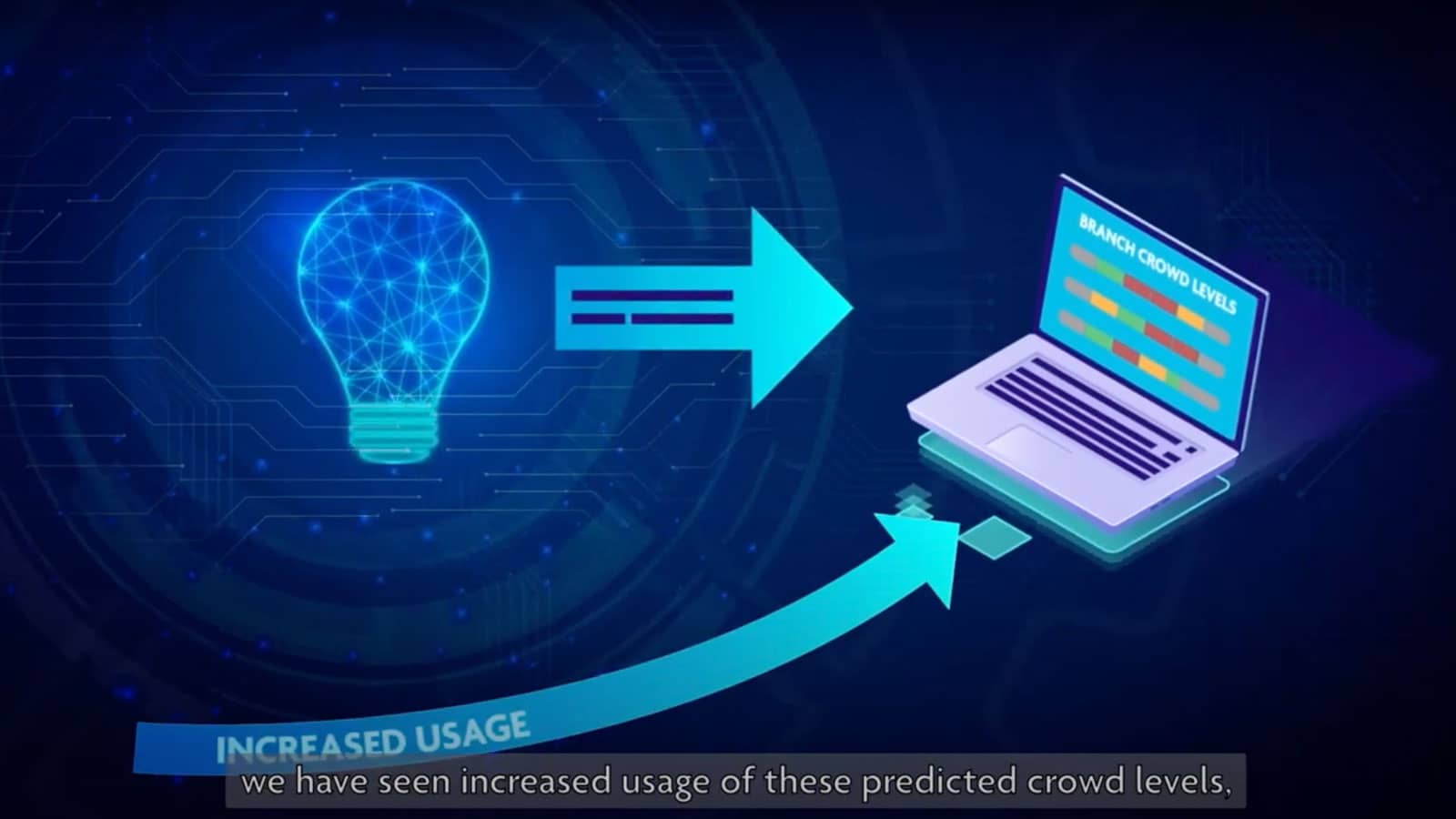
Although the coronavirus pandemic disrupted the lives of many, it also presented a unique opportunity for UOB to revitalize the branch experience for our customers. The Branch Crowd Advisor is a seamless online-to-offline crowd management solution that enables customers to better plan their visits to any branch, safely and conveniently.
Using techniques in AI and machine learning, the expected crowd levels at various branches at any given hour and day can be forecasted by the advisor and displayed onto an intuitive web dashboard. Visual signals on the dashboard, akin to traffic light indicators, were designed to be easily understood so that customers would enjoy a fluid user experience. The ability of the advisor to forecast crowd levels up to a week ahead of time assures customers of shorter waiting times. Moreover, safe distancing measures could be better enforced as crowd distributions are further balanced out across the branch network.
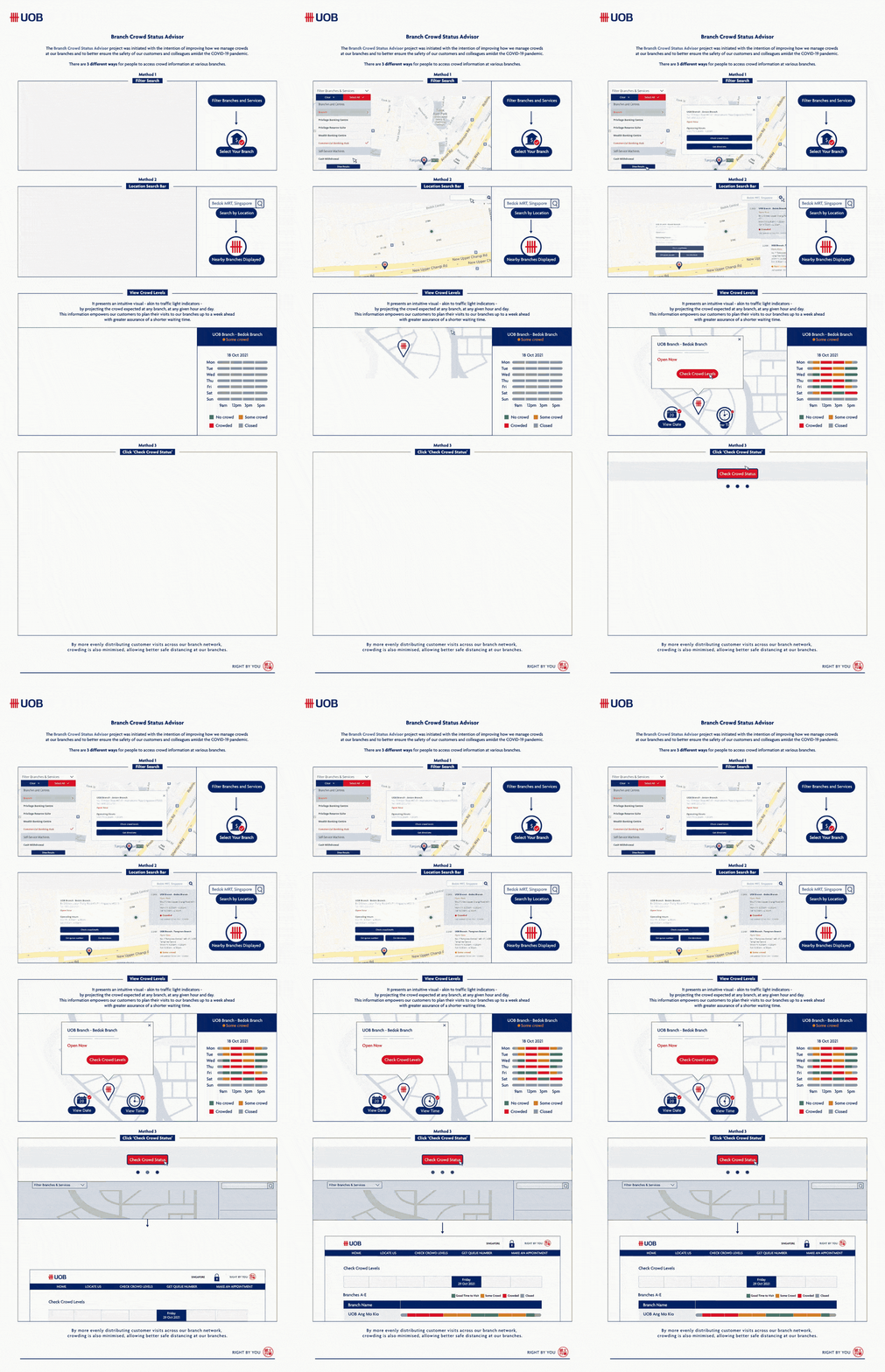
At the dawn of the pandemic, the Bank was able to react promptly when the Singapore government introduced nationwide safe management measures. Back then, the implementation and deployment of the advisor could be swiftly accomplished given the Bank’s foundations in digitalising branch operations by investing in data modernisation and adopting data science and adoption of AI capabilities.
Since the inception of the Branch Crowd Advisor, we have observed a marked increase in the number of customers making use of forecasted crowd levels to plan their trips to our branches. This forward-planning of branch resources in turn ensures that customer queues are minimised and branches are adequately staffed to meet customers’ demands.

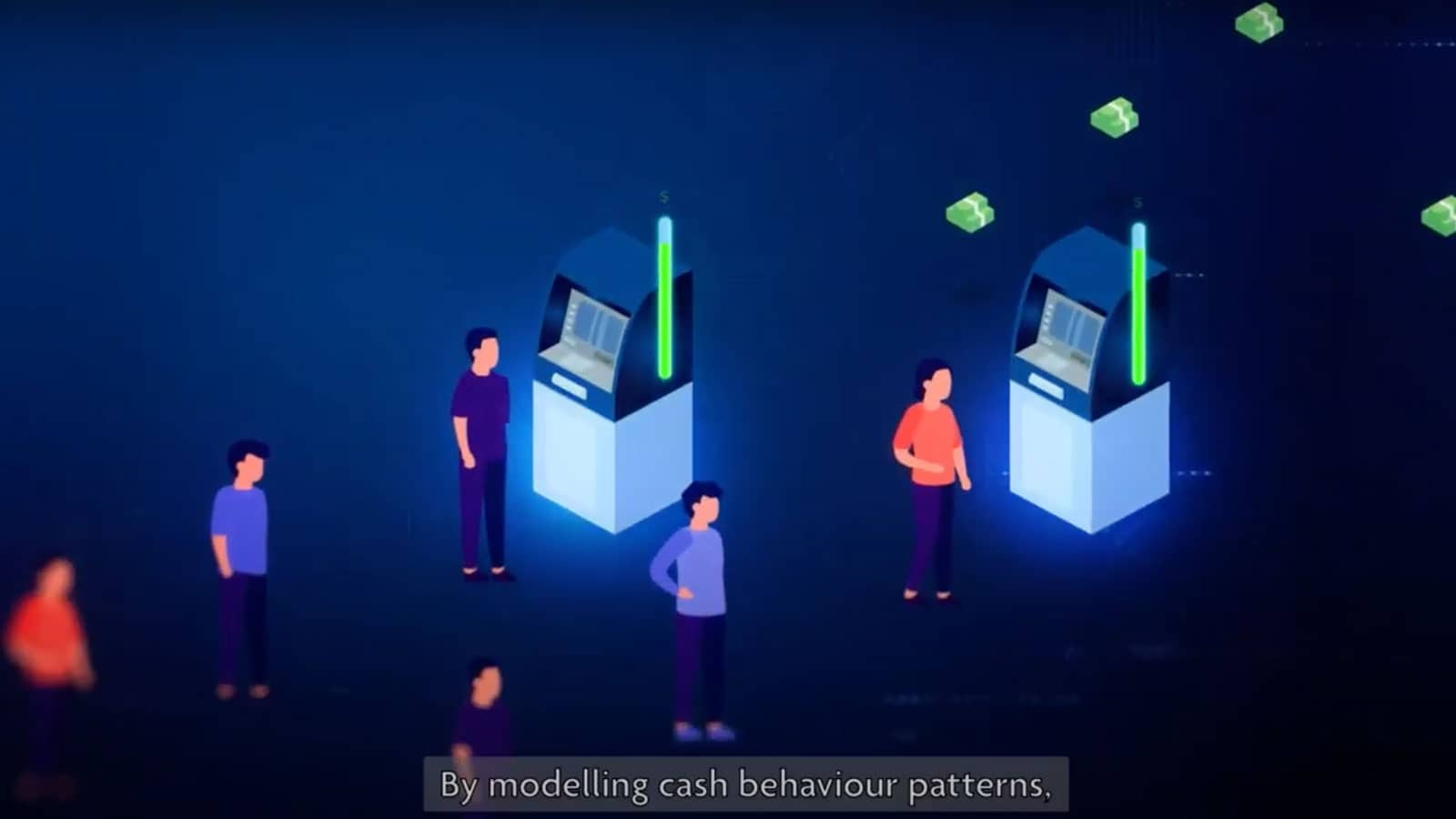
UOB has over 600 self-service banking machines across Singapore, including Automated Teller Machines, Cash Deposit Machines and Multi-Function Machines that support Passbook Update and Coins Deposit functions. In order to steadily maintain optimal levels of cash, cash transportation trips need to be regularly scheduled to replenish the machines. It is worth noting that such trips constitute a considerable share of operating cost.
As part of cost reduction efforts, UOB has leveraged its in-house platform to develop a Cash-in-Transit machine-learning model. Trained on cash behaviour patterns, the trip-scheduling process could be optimised by the model to produce a schedule that generates the best cash availability. This increases accuracy in machine replenishment and therefore improves operating cost by minimising the amount of idle cash.
Preliminary pilot runs were promising – the needs of customers could be adequately anticipated and proactively managed to ensure that each machine was promptly replenished with the required quantities and denominations. As a consequence, the number of cash replenishment trips could be reduced by up to 25%. By the same token, customer experience would improve because machine downtime and cash-out situations are minimised.
In a wider perspective, fewer cash replenishment trips result in shorter vehicle road time. In turn, this helps the Bank progress towards better sustainability and a lower carbon footprint. Results obtained thus far have been encouraging. This lays the groundwork to examine expanding the scope of the model further to encompass preventive maintenance of the machines, by using cash movement as an indication.
Managing promotion campaigns is traditionally based on business judgement. The main challenge lies in deciding exactly which campaign to launch so that the best possible customer qualification rate can be achieved. By and large, the key steps that are involved – campaign planning, campaign setup, test marketing, implementation, analysis and reporting and optimising for the next campaign – are often performed manually. This proves to be a highly tedious and time-consuming process.
Moreover, it becomes increasingly challenging to manage campaigns manually as more and more customers are added. For these reasons, the Bank has recognised the need for an AI-based model capable of recommending campaigns with high potential for success. In addition, it should be able to provide rapid and effective evaluation of results to refine various campaign parameters post-campaign.
The Campaign Response Prediction model was developed to address these challenges. Using the model, campaign planners are provided the means to specify multiple campaign parameters that can be tested against different audiences in the model, giving results in a matter of minutes rather than weeks. This allows for rapid iterations to be performed so that the optimal parameters may be obtained to maximise customer qualification rates.
At the initial planning stage, a list of all potential campaigns is first sifted out from an extensive product inventory. Exploratory data analysis and feature engineering steps are next applied onto the input data in preparation for model training. Finally, the model is trained using a variety of advanced machine learning techniques.
The model was demonstrated to be versatile in accommodating various usage scenarios. For example, campaigns can be recommended for specific customer segments. On account of these, the Campaign Response Prediction model has managed to significantly improve customer qualification rates and implementation turnaround time when launching new campaigns.